Two Outfits That Confuse Everyone
If you have ever stood in a clothing store or scrolled through an online fashion site and wondered — “Wait, is this a sharara or a gharara?” — you are not alone. Even experienced shoppers mix these two up.
Both outfits look similar at first glance. feature wide-legged bottoms. Both have deep roots in South Asian fashion history. However, the difference between sharara and gharara is actually quite clear once you know what to look for.
In this guide, we explain everything in simple terms. We cover the history, the silhouette differences, the occasions each outfit suits best, how to style them, and where to buy beautiful versions of both.
Whether you are shopping for a sharara or a gharara, this guide will help you choose with confidence.
A Quick History of Sharara and Gharara
Where Did the Sharara Come From?
The sharara has its origins in the Mughal courts of South Asia. It was worn by noblewomen and aristocrats as a symbol of grace and elegance. The silhouette — wide, flowing trousers paired with a short kurta — became closely associated with the culture of Lahore and Delhi during the Mughal period.
Over time, the sharara evolved. It moved from royal courts into everyday bridal fashion and festive wear. Today, it is one of the most beloved traditional outfits in Pakistani fashion.
Where Did the Gharara Come From?
The gharara has its roots in the Nawabi culture of Lucknow and Hyderabad. It was the outfit of choice for aristocratic Muslim women in the Indian subcontinent. The heavily embellished, structured silhouette reflected the grandeur of those royal households.
According to fashion historians, the gharara became especially popular in the 18th and 19th centuries as a symbol of cultural refinement. You can read more about Pakistani fashion heritage on the Victoria and Albert Museum’s South Asian fashion archive — an excellent resource for understanding how these styles developed over centuries.
The Core Difference Between Sharara and Gharara
Here is the most important thing to understand. This single difference separates the two outfits completely.
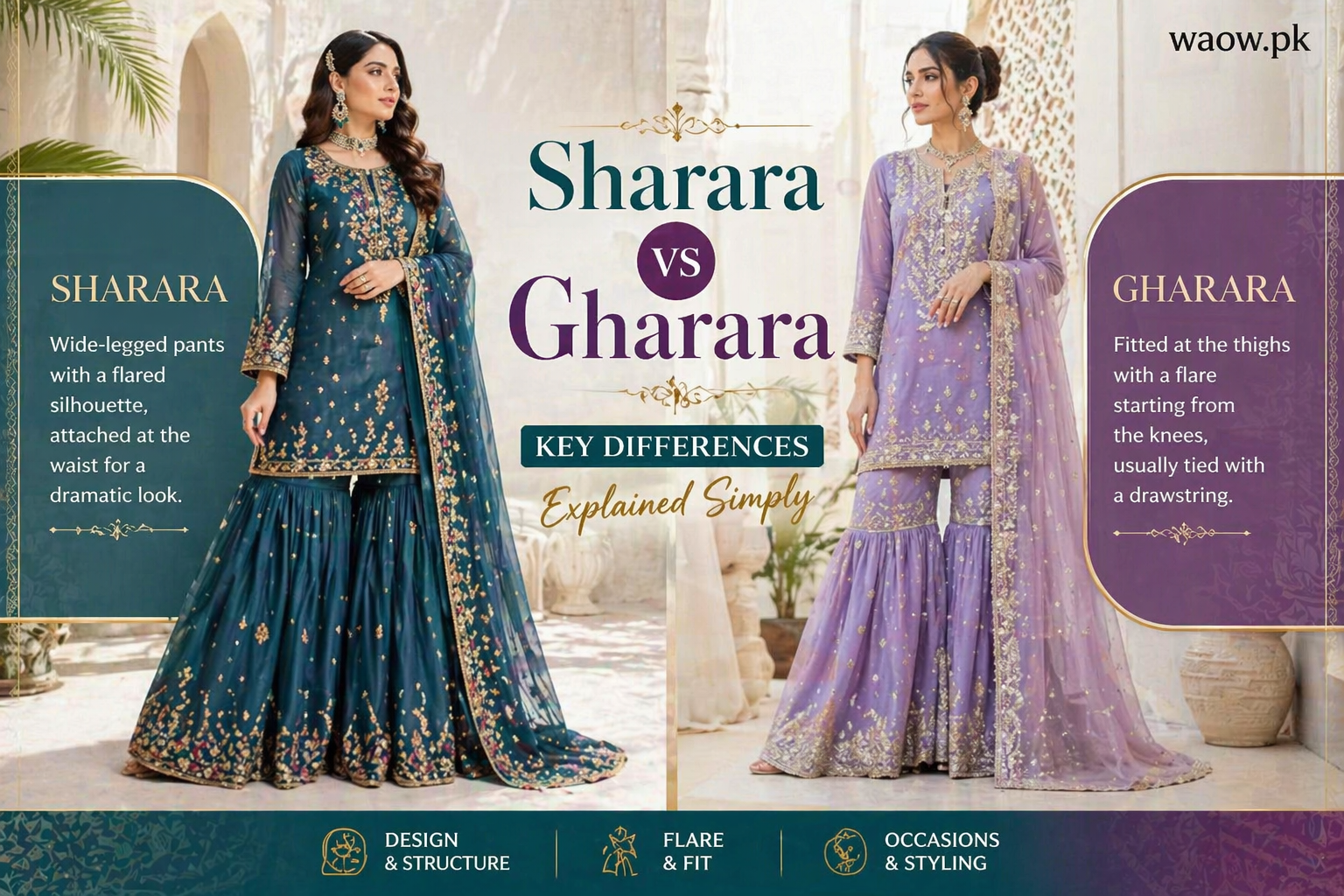
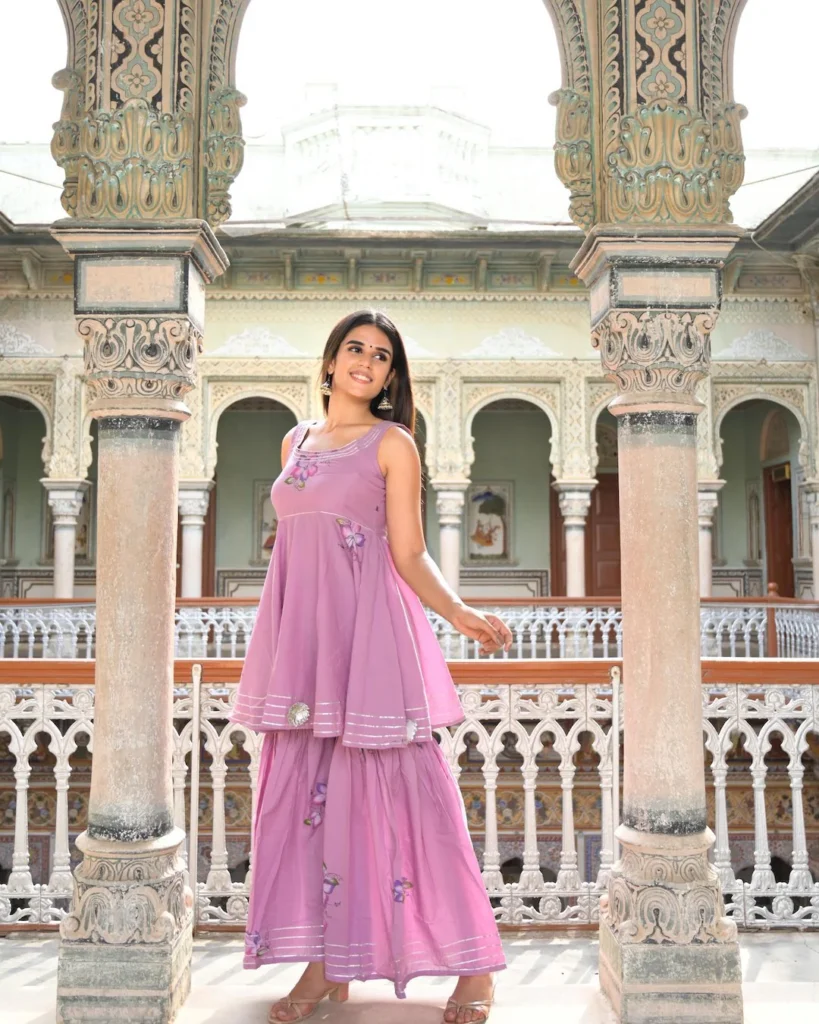
A sharara is wide and flared from the waist all the way to the floor. The trouser leg is voluminous throughout — from top to bottom. When you wear a sharara, both legs look like one continuous flowing wave of fabric.
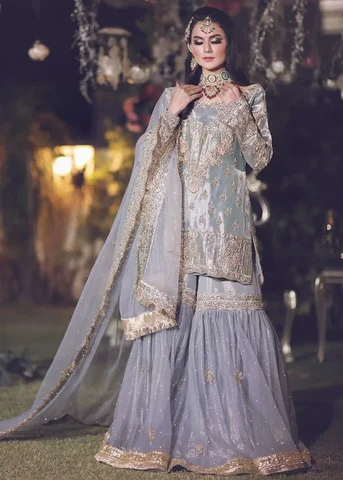
A gharara is fitted at the thigh and flares dramatically below the knee. The upper portion hugs the leg. Then — usually at the knee — it suddenly opens up into wide, heavily gathered fabric that falls to the floor. This creates a distinctive “two-tier” or “ruffle” effect.
In simple terms: if the flare starts at the waist, it is a sharara. If the flare starts at the knee, it is a gharara. That is the rule.
Sharara vs Gharara — Quick Comparison Table
| Feature | Sharara | Gharara |
| Silhouette | Flared from the waist | Flared from the knee |
| Trouser Cut | Wide and flowing all the way | Fitted thigh, wide calf |
| Style Vibe | Romantic, dreamy, voluminous | Structured, regal, classic |
| Occasions | Mehndi, Eid, festive events | Nikkah, barat, formal events |
| Fabric | Chiffon, georgette, organza | Net, silk, velvet, brocade |
| Body Type | Flatters all body types | Best for petite or slim frames |
| Heritage | Mughal court fashion | Lucknow & Hyderabadi royalty |
Understanding the Silhouette Difference
Sharara Silhouette
When a woman wears a sharara, the trouser panels are cut wide from the very top. The result is a beautiful, sweeping silhouette that moves with every step. It creates a romantic, princess-like look.
The flare is continuous. There is no break or gathering at the knee. This gives the sharara its signature flowing, dreamy quality. It looks especially beautiful in lightweight fabrics like chiffon and georgette.
Gharara Silhouette
The gharara creates a very different visual. The top portion of the trouser is fitted — it follows the shape of the thigh. Then, below the knee, the fabric suddenly explodes outward into multiple gathered layers.
This creates a dramatic, structured look. The gathered section at the bottom often has multiple rows of embroidery, lace, or fabric panels sewn into it. The gharara looks more formal and architectural than the sharara.
If you want to explore the gharara’s structured elegance, take a look at the gharara collection on waow.pk — there are some genuinely stunning examples that show how modern designers have reimagined this classic silhouette.
Which Outfit Is Right for Which Occasion?
Best Occasions for a Sharara
The sharara is a versatile outfit. Because of its flowing, romantic quality, it works beautifully for:
- Mehndi events — the colours and movement of a sharara photograph beautifully
- Eid celebrations — especially in festive colours like mint, peach, or powder blue
- Semi-formal family gatherings — easier to wear for longer events than a gharara
- Engagement ceremonies — a pastel sharara with delicate embroidery is a popular choice
If you are preparing for your mehndi day, also browse the beautiful mehndi dresses on waow.pk for coordinated outfit inspiration across your entire wedding event schedule.
Best Occasions for a Gharara
The gharara carries more formality and weight. Because of its structured, layered look, it is perfect for:
- Nikkah ceremonies — the regal look of a gharara is ideal for this sacred event
- Barat functions — especially in heavier fabrics like velvet, silk, or brocade
- Formal cultural events where traditional dress is expected
- Photography sessions where the structured silhouette photographs dramatically
For brides specifically, see our guide to the Faraz Manan Bridal Collection 2026 — one of Pakistan’s top designers known for his mastery of traditional silhouettes including the gharara.
Fabric Choices: Sharara vs Gharara
Fabrics That Work Best for a Sharara
Because the sharara relies on flow and movement, it looks best in fabrics that drape softly. The most popular choices are:
- Chiffon — lightweight, airy, moves beautifully with every step
- Georgette — slightly heavier than chiffon, still very fluid
- Organza — adds a subtle shimmer while maintaining flow
- Tissue fabric — for festive and semi-formal events
Fabrics That Work Best for a Gharara
The gharara needs fabric with body and structure. It works best when the fabric can hold the gathered lower section in place. Great choices include:
- Net — the most traditional choice for a gharara base and embellished panels
- Raw silk — structured and luxurious
- Velvet — for winter weddings and formal events
- Brocade and jamawar — deeply traditional, richly textured
For luxury bridal gharara styles in premium fabrics, the luxury bridal lehenga and luxury bridal gowns sections at waow.pk are worth exploring — many of these pieces incorporate gharara-inspired elements at the base.
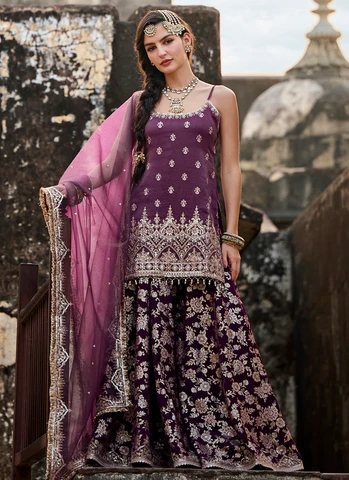
Embroidery and Embellishment: What to Expect
Embroidery on a Sharara
Sharara embroidery is typically spread across the entire outfit. The kurta receives embroidery on the front, back, neckline, and sleeves. The trouser panels may have embroidery running down the edges or along the hem.
Common embroidery techniques include resham threadwork, gota patti, and mirror work. In more casual versions, digital printing replaces hand embroidery to reduce cost.
Embroidery on a Gharara
Gharara embellishment tends to be concentrated on the gathered lower section. This is the “showpiece” of the outfit — and the embroidery reflects that. Expect heavily worked panels with zardozi, dabka, sitara, and stone work.
The upper fitted portion is often simpler to contrast with the richness of the lower section. This creates a beautiful balance — the eye is naturally drawn downward to the dramatic base of the outfit.
Which Silhouette Suits Your Body Type?
Sharara and Body Types
The sharara is one of the most universally flattering traditional outfits in Pakistani fashion. Because the wide trouser begins at the waist, it creates a balanced, elongated silhouette that works for all body types.
Women with fuller figures often find the sharara more comfortable and more flattering than a gharara. The continuous flare skims the body rather than highlighting specific areas.
Gharara and Body Types
The gharara works best for petite or slender women. The fitted thigh section means the outfit follows the body closely before flaring out. This can be unflattering for women who prefer not to highlight the thigh area.
However, modern designers have created hybrid versions that add volume to the upper portion or use strategic draping to make the gharara more accessible for all figures.
Styling Tips for Both Outfits
How to Style a Sharara
The flowing sharara works best with a shorter or mid-length kurta. Avoid a very long kurta — it will hide the beautiful movement of the trouser panels. Pair with delicate jewellery like jhumkas and a simple maang tikka. For footwear, traditional khussa or block heels work beautifully with a sharara silhouette.
Choose a dupatta in a contrasting or complementary shade. A net or chiffon dupatta worn on one shoulder creates a modern, elegant look.
How to Style a Gharara
The gharara demands more structured styling. Pair it with a fitted, waist-length kurta or angarkha top. The embellishment on the lower section means you can keep the top simpler.
Jewellery should be bold and traditional — heavy sets work well. Think statement earrings and a maatha patti. Read our styling insights in the Elan Luxury Festive Collection 2026 guide for ideas on pairing traditional silhouettes with high-end jewellery and dupatta styling.
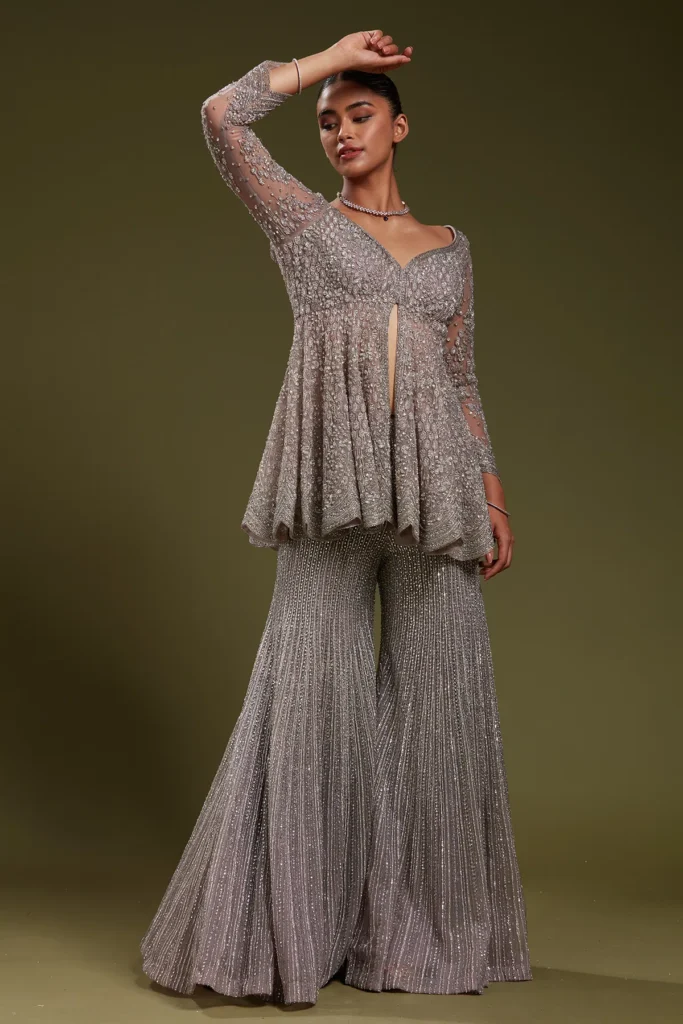
Dupatta Styling for Both
For the sharara, a lightweight chiffon or organza dupatta draped loosely over one shoulder is the go-to style. It does not compete with the outfit.
For the gharara, a heavier dupatta in net or silk is more appropriate. The dupatta is often pinned or pleated formally — reflecting the outfit’s traditional roots.
Price Range: Sharara and Gharara in Pakistan
Prices vary widely depending on fabric, embroidery depth, and brand. Here is a realistic breakdown to help you plan:
Sharara Price Range
- Budget casual sharara (printed, ready-to-wear): PKR 3,500 to PKR 8,000
- Mid-range embroidered sharara (pret): PKR 8,000 to PKR 25,000
- Luxury festive sharara: PKR 25,000 to PKR 80,000
- Bridal sharara (custom couture): PKR 80,000 and above
Gharara Price Range
- Budget casual gharara: PKR 5,000 to PKR 12,000
- Mid-range embroidered gharara: PKR 12,000 to PKR 40,000
- Luxury bridal gharara: PKR 40,000 to PKR 150,000+
Generally, gharara outfits tend to cost more than shararas at the same embellishment level. This is because a gharara requires more fabric in the gathered lower section and more detailed embroidery work.
Where to Buy Beautiful Sharara and Gharara Outfits
Buying In Pakistan
Most multi-brand boutiques and designer stores in Lahore, Karachi, and Islamabad stock both sharara and gharara outfits. Major ready-to-wear brands like Sana Safinaz, Elan, and Maria B. regularly include both styles in their seasonal collections.
Buying online via waow.pk
For buyers inside Pakistan and internationally, waow.pk is a trusted platform for Pakistani designer fashion. The platform stocks a well-curated range of sharara outfits and gharara sets across various price points and occasions.
Beyond sharara and gharara, waow.pk also carries a comprehensive range of Pakistani wedding and formal fashion — from nikkah dresses and barat outfits to full bridal couture. Worldwide delivery is available to the UK, USA, UAE, Canada, and Australia.
How Sharara and Gharara Compare to Other Pakistani Outfits
Sharara vs Lehenga
A lehenga is a full skirt worn with a short blouse (choli) and dupatta. A sharara is a wide-legged trouser outfit — it is not a skirt. The key difference is in the construction. The lehenga collection has its own distinct silhouette, though it shares some visual similarities with a sharara from a distance.
Gharara vs Pishwas
A pishwas is a long, fitted dress that flares at the hem — essentially an Anarkali-style frock. It is a single continuous garment, not separates. A gharara is a two-piece outfit with a fitted trouser top and flared base. Explore the pishwas category on waow.pk to see how different these silhouettes truly are.
Sharara vs Shalwar Kameez
A shalwar kameez features a trouser with a varying degree of fullness — usually narrower than a sharara. The sharara is specifically cut with dramatic width and flare. They serve different purposes — the shalwar kameez is an everyday outfit while the sharara is primarily festive or formal.
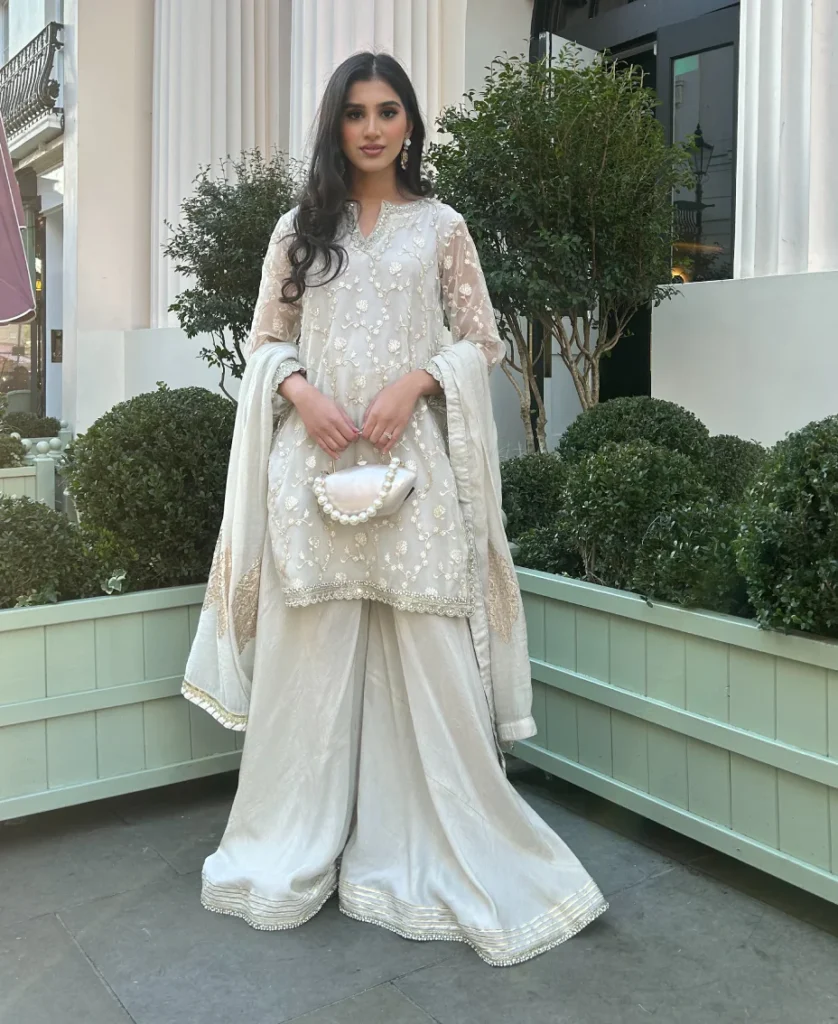
Current Trends: Sharara and Gharara in 2026
Both outfits are experiencing strong renewed interest in 2026. Pakistani designers have reimagined these traditional styles with modern sensibilities. Here is what is trending:
Sharara Trends 2026
- Pastel-on-pastel colour combinations — dusty rose, sage green, powder lavender
- Minimal embroidery with raw fabric textures — less is more
- Angarkha-style kameez paired with a flowing sharara
- Digital printed shararas for casual and Eid wear
- Cape-style dupattas replacing the traditional draped dupatta
Gharara Trends 2026
- Mono-colour tone-on-tone embroidery — white on white, ivory on ivory
- Shorter, cropped kameez with heavily embellished gharara base
- Velvet gharara for winter wedding season
- Bridal gharara in blush, champagne, and off-white shades
- Contemporary designers reviving the Lucknowi chikankari gharara
For a broader view of luxury Pakistani fashion trends in 2026, read our detailed guide on the Elan Luxury Festive Collection Pakistan 2026 — one of the most influential collections for formal and bridal silhouettes this year.
Pros and Cons: Sharara vs Gharara
Sharara — Pros
- Universally flattering — suits most body types
- More comfortable for long events due to relaxed fit
- Versatile — works for casual, semi-formal, and formal occasions
- Wide variety available across all price ranges
- Easy to move in — ideal for dancing at mehndi functions
Sharara — Cons
- Can feel too casual for very formal bridal events
- Wide legs can be difficult to manage on staircases or crowded venues
- Requires good tailoring to avoid looking shapeless
Gharara — Pros
- Extremely regal and photogenic — perfect for wedding photography
- Strong cultural and historical identity
- The structured base creates a dramatic, unforgettable look
- Embroidery on the lower section is a true craft showcase
Gharara — Cons
- Fitted thigh section may not suit all body types
- Generally more expensive due to fabric and embroidery requirements
- Less practical for casual or outdoor events
- Can feel heavy and warm in summer months
Conclusion
Now you know the real difference between a sharara and a gharara. The sharara flows from the waist, creating a romantic and versatile silhouette. The gharara fits at the thigh and flares from the knee, creating a structured and regal look.
Both are deeply beautiful expressions of Pakistani fashion heritage. Choosing between them comes down to your occasion, your body type, and the look you want to create.
If you are ready to shop, explore the full range of sharara and gharara outfits on waow.pk. And if you are still exploring your options for a special occasion, also take a look at the platform’s ready-to-wear collection — it covers every style from casual pret to full bridal couture.
Frequently Asked Questions (FAQs)
Q1. What is the main difference between sharara and gharara?
A sharara flares from the waist all the way to the floor. A gharara is fitted at the thigh and flares only from the knee downward. That single structural difference is what separates the two.
Q2. Which is more suitable for a bridal outfit — sharara or gharara?
Both work beautifully as bridal outfits. The gharara is considered more traditional and regal for nikkah and barat. The sharara is a popular choice for mehndi events. Explore both styles in our wedding attire section for inspiration.
Q3. Is a gharara harder to wear than a sharara?
Yes, slightly. The fitted thigh section of a gharara makes walking and sitting more structured. A sharara is generally more relaxed and comfortable for long events.
Q4. Which outfit is better for plus-size women?
The sharara is more flattering for plus-size women. The wide flare from the waist creates a balanced silhouette without highlighting any specific area. A gharara’s fitted upper section can feel restrictive.
Q5. Can I wear a sharara or gharara to an office event?
A simple, unembroidered sharara in a solid colour can work for a formal office setting. A heavily embellished gharara is better suited to weddings and cultural events rather than professional environments.
Q6. Are sharara and gharara the same as a lehenga?
No. A lehenga is a full skirt — it has no trouser construction. A sharara and gharara are both wide-legged trouser outfits. They look similar from a distance but are constructed very differently. See the lehenga collection for a clear visual comparison.
Q7. Where can I buy authentic sharara and gharara outfits online?
You can shop a quality range of both on waow.pk — a trusted Pakistani fashion platform with worldwide delivery. The site carries styles across all price points, from casual pret to luxury bridal.